Author: admin9295

  • Build a Free WordPress Website with AI

    The Complete Guide

    Discover how AI Builder revolutionizes WordPress website creation with powerful AI tools and a generous free tier

    In today’s digital landscape, creating a professional website no longer requires coding expertise or a hefty budget. AI Builder, a revolutionary WordPress plugin, empowers users to build stunning websites using artificial intelligence. Whether you’re a freelancer launching your portfolio, an entrepreneur starting an online business, or a marketer creating landing pages, AI Builder transforms the website creation process from hours of work into minutes of guided interaction.

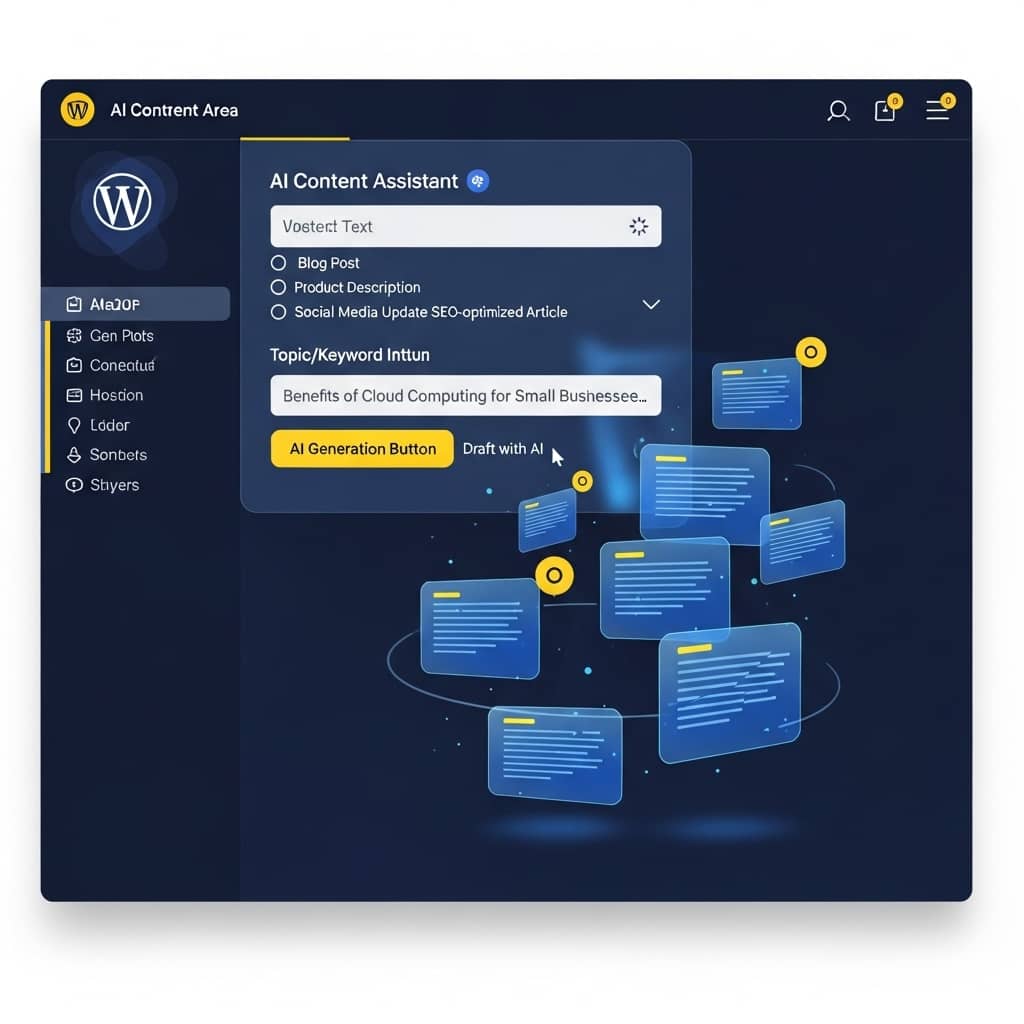
    The plugin integrates seamlessly with WordPress’s native Gutenberg editor, generating complete pages, blocks, images, and optimized content through simple text prompts. What sets AI Builder apart is its commitment to accessibility—offering a robust free tier that lets you experience the full power of AI-driven web design without any upfront investment.

    Free Tier: 75 Credits to Get Started

    AI Builder’s free version provides 75 credits upon installation, giving you substantial room to explore and build. These credits power all AI features—from generating entire pages to creating individual blocks and images. For context, generating a complete landing page typically consumes 75 credits, while individual text blocks or images use 20-30 credits each. This means you can create a complete page or individual elements before considering an upgrade.

    The free tier includes access to all core features: AI page generation, Gutenberg block creation, text writing, image generation, and automatic image compression. There are no feature restrictions—only a credit limit. This approach ensures you can fully evaluate AI Builder’s capabilities and determine if it fits your workflow before committing financially. For small projects, personal blogs, or testing purposes, the free tier often provides sufficient resources to complete your website.

    Premium Plan: Unlimited Creation for $20/Month

    For professionals managing multiple projects or agencies building client websites, the premium plan at $20 per month removes all credit limitations. This subscription provides unlimited access to every AI Builder feature, allowing you to generate as many pages, blocks, images, and text elements as your projects demand. The pricing is intentionally affordable, recognizing that web professionals need predictable costs without per-project surprises.

    Premium subscribers also receive priority support and early access to new features as they’re released. The subscription model ensures continuous development and improvement of the plugin, with regular updates that expand capabilities and refine existing tools.

    Core Features: What AI Builder Can Do

    Bulk AI Page Generation

    AI Builder allows you to generate multiple complete pages at once, each from its own prompt. You simply provide a separate prompt for each page you want to create—for example, one for the home page, one for the gallery, one for the about page, and so on. The AI then generates each page individually with appropriate content, layout, and styling. This gives you full control over the tone and purpose of every page while still dramatically speeding up the website creation process.

    AI-Powered Gutenberg Blocks

    Beyond full pages, AI Builder excels at creating individual Gutenberg blocks on demand. Need a testimonial section? A pricing table? A feature comparison grid? Simply describe what you need, and the AI generates the appropriate block structure with placeholder content that matches your request. These blocks use native WordPress Gutenberg components—headings, paragraphs, columns, buttons, images—ensuring full compatibility and editability. You’re never locked into proprietary formats; everything remains standard WordPress that you can modify using familiar tools.

    AI Image Generation

    AI Builder includes integrated image generation directly within Gutenberg image blocks. When you add an image block, you can describe the image you need—”modern office workspace with natural lighting” or “abstract technology background in blue tones”—and the AI creates a custom image matching your description. This eliminates dependency on stock photo libraries and ensures visual content aligns perfectly with your specific needs. Generated images are automatically optimized for web use, balancing quality and file size for fast loading times.

    AI Text Writing

    Content creation often represents the most time-consuming aspect of website building. AI Builder’s text generation feature addresses this by producing high-quality copy for any purpose. Whether you need product descriptions, blog post introductions, service explanations, or call-to-action text, the AI generates professional, contextually appropriate content. You provide the topic and tone, and the AI delivers polished text that you can use as-is or edit to match your voice. This feature proves invaluable for overcoming writer’s block and maintaining consistent content quality across your site.

    How AI Builder Works: Technical Architecture

    Understanding how AI Builder operates helps appreciate its flexibility and power. The plugin generates native Gutenberg blocks—the same building blocks WordPress uses for all content. When you request a page or block, the AI analyzes your prompt and creates a JSON structure defining the blocks, their attributes, and their relationships. This structure is then rendered as standard WordPress content that appears in your Gutenberg editor, fully editable using WordPress’s native controls.

    In addition to native Gutenberg blocks, AI Builder includes custom blocks that extend WordPress’s capabilities. These include contact forms, statistics charts, image carousels, YouTube video embeds, tabbed content, notification snackbars, product cards, fixed background sections, and interactive maps. These custom blocks integrate seamlessly with native blocks, providing enhanced functionality while maintaining the same editing experience. All blocks—native and custom—work together harmoniously in your layouts.

    Each AI-generated page includes custom CSS tailored to that specific page’s design. This CSS is stored with the page and can be viewed and modified through the interface. The styling approach ensures pages look professional immediately while giving you complete control to adjust colors, spacing, typography, and responsive behavior. The CSS uses modern best practices including CSS variables, mobile-first responsive design, and accessibility considerations. You can edit this CSS directly or use WordPress’s built-in customization tools to make changes visually.

    Start Building Your Free AI-Powered Website Today

    AI Builder democratizes professional web design, making it accessible to everyone regardless of technical skill or budget. The free tier lets you experience the full power of AI-driven website creation, while the affordable premium plan supports unlimited professional use. With its combination of native Gutenberg integration, custom blocks, and intelligent content generation, AI Builder represents the future of WordPress website building.

    Learn More About AI Builder

    Home

    Explore AI Builder’s main features and see how it transforms WordPress website creation.

    Features

    Discover detailed information about AI Builder’s powerful capabilities and tools.

    Pricing

    Compare free and premium plans to find the perfect option for your needs.

  • Using AI to Generate Detailed Content Briefs for WordPress

    Using AI to Generate Detailed Content Briefs for WordPress Bloggers

    Transform your editorial workflow with AI-powered content briefs that deliver comprehensive outlines, semantic keywords, and strategic insights in seconds.

    What Is a Content Brief and Why Does It Matter?

    A content brief is a strategic document that guides writers through the creation of high-quality, SEO-optimized content. It serves as a roadmap, outlining everything from target keywords and audience personas to tone of voice and structural requirements. For WordPress bloggers and copywriters, a well-crafted brief eliminates guesswork and ensures every piece aligns with editorial standards and search intent.

    Content briefs matter because they bridge the gap between SEO strategy and creative execution. They help writers understand user intent, incorporate semantic keywords naturally, and structure articles for both readers and search engines. Without a brief, content often misses the mark—failing to rank, engage, or convert. With one, teams produce consistent, high-performing content faster.

    AI-Powered Content Brief Tools: What They Deliver

    Modern AI content brief generators transform a simple topic and audience description into comprehensive, actionable guides. These tools analyze search data, competitor content, and semantic relationships to produce briefs that cover every angle. According to SEO Review Tools, their AI Content Brief Generator creates detailed outlines including topic focus, content goals, format recommendations, audience profiles, title suggestions, semantic keywords, recommended word counts, related questions, and curated external resources.

    The beauty of AI-generated briefs lies in their depth and speed. Instead of spending hours researching keywords, analyzing SERPs, and compiling questions, editors receive a structured document in minutes. Writers get clear direction on what to cover, how to structure their piece, and which terms to prioritize—all aligned with current search trends and user intent.

    Modern content planning workspace with digital document templates, sticky notes, keyword lists, and editorial calendar on a clean desk, professional photography style, bright natural lighting

    Key Components of an AI-Generated Content Brief

    A comprehensive AI content brief typically includes the following elements, each designed to streamline the writing process and maximize SEO impact:

    • Topic and Content Goal: Clear definition of what the piece aims to achieve—educate, convert, or inform.
    • Target Audience: Detailed persona including pain points, search behavior, and expertise level.
    • Format Recommendations: Suggested structure (how-to, listicle, guide) based on top-ranking content.
    • Title Suggestions: Multiple headline options optimized for click-through and SEO.
    • Semantic Keywords: Primary and LSI keywords with search volume and difficulty scores.
    • Recommended Word Count: Data-driven length based on competitor analysis and topic depth.
    • Related Questions: People Also Ask queries and common user questions to address.
    • External Resources: Authoritative sources and reference links to support claims.

    These components work together to create a holistic guide that addresses both search engine requirements and reader needs. Writers no longer need to guess at structure or keyword placement—the brief provides a proven framework based on real SERP data.

    How AI Analyzes SERPs to Inform Content Briefs

    AI content brief tools don’t operate in a vacuum—they actively scan and analyze search engine results pages to understand what’s working. By examining top-ranking articles, these tools identify patterns in structure, keyword usage, content depth, and multimedia elements. They extract People Also Ask questions, related searches, and entity associations that signal what users truly want to know.

    This SERP analysis ensures briefs reflect current search intent rather than outdated assumptions. If Google prioritizes video content, comparison tables, or step-by-step instructions for a given query, the AI brief will recommend those formats. If PAA questions reveal specific concerns or subtopics, they’re automatically included in the outline. The result is content that aligns with both algorithmic preferences and user expectations.

    Entity recognition adds another layer of sophistication. AI tools identify key concepts, brands, and related topics that search engines associate with your target keyword. By incorporating these entities naturally, writers create content that signals topical authority and relevance—critical factors in modern SEO.

    Customizing AI Briefs for Brand Voice and Strategy

    While AI-generated briefs provide an excellent foundation, editors should always customize them to match brand voice, editorial standards, and specific campaign goals. Here are practical tips for refining AI briefs:

    1. Align Tone and Voice

    AI tools generate neutral, professional briefs by default. Add notes about your brand’s personality—whether conversational, authoritative, playful, or technical. Specify preferred pronouns, sentence structure, and any words or phrases to avoid. This ensures writers produce content that sounds authentically yours.

    2. Prioritize Strategic Keywords

    AI briefs often include dozens of semantic keywords. Review the list and highlight the most important terms based on your SEO strategy, search volume, and conversion potential. Provide guidance on keyword density and natural placement to avoid over-optimization.

    3. Add Internal Linking Opportunities

    AI tools suggest external resources, but they can’t know your site’s internal architecture. Manually add links to relevant existing content, product pages, or pillar articles. This strengthens your site’s topical authority and improves user navigation. For example, link to your features page when discussing capabilities, or your pricing page when mentioning plans.

    4. Refine Content Goals

    AI briefs define general goals like ‘educate’ or ‘inform,’ but you can make them more specific. Clarify whether the piece should drive newsletter signups, demo requests, or product trials. Include CTAs, conversion points, and any promotional messaging that aligns with current campaigns.

    5. Validate Recommendations

    AI is powerful but not infallible. Cross-check suggested word counts, title options, and external sources. Ensure recommendations align with your editorial calendar, audience expertise level, and competitive positioning. Adjust as needed to reflect your unique insights and market knowledge.

    The Editorial Efficiency Advantage

    AI-generated content briefs dramatically improve editorial efficiency by reducing research time, standardizing quality, and enabling scalable content production. Teams that once spent hours per brief now generate comprehensive guides in minutes, freeing editors to focus on strategy and writers to focus on craft.

    For WordPress bloggers managing multiple sites or agencies juggling dozens of clients, AI briefs ensure consistency without sacrificing quality. Every writer receives the same level of detail and strategic direction, regardless of their SEO expertise. This democratizes content creation and raises the baseline for all published work.

    Moreover, AI briefs adapt to algorithm changes faster than manual processes. As search engines evolve, AI tools update their analysis to reflect new ranking factors, user behaviors, and content formats. Your briefs stay current without constant manual revision.

    Transform Your Content Workflow Today

    AI-powered content brief generation represents a fundamental shift in how WordPress teams approach content creation. By combining SERP analysis, semantic keyword research, and user intent mapping, these tools deliver briefs that are both comprehensive and actionable. Writers get clear direction, editors save time, and published content performs better in search results.

    Whether you’re a solo blogger, a content agency, or an in-house marketing team, AI briefs help you scale quality content production without scaling headcount. They ensure every piece aligns with SEO best practices, addresses user questions, and reflects current search trends—all while maintaining your unique brand voice and strategic goals.

  • AI Topical Maps & Internal Linking for WordPress SEO

    Using AI to Generate Topical Maps and Internal Linking Strategies in WordPress

    A comprehensive guide for SEO managers on leveraging AI tools to build topical authority and optimize internal linking for better search rankings.

    Why Topical Authority Matters for Modern SEO

    In today’s competitive search landscape, building topical authority has become essential for ranking success. Search engines no longer evaluate pages in isolation—they assess your site’s overall expertise on a subject by analyzing how comprehensively you cover related topics. AI-powered topical map generators revolutionize this process by automatically scanning your WordPress site, identifying content gaps, and organizing your articles into logical topical clusters.

    These intelligent tools analyze your existing content library, understand semantic relationships between topics, and create a strategic roadmap for content development. By leveraging natural language processing and machine learning, AI topical map generators help SEO managers build comprehensive content ecosystems that demonstrate true subject matter expertise to both users and search engines.

    Key Features of AI Topical Map Generators

    Modern AI topical map generators offer powerful capabilities that transform how SEO managers approach content strategy. Tools like WP SEO AI’s topical map generator provide automated solutions that save countless hours of manual analysis while delivering superior results.

    • Automatic Content Categorization: AI scans your entire WordPress site and intelligently groups existing articles into thematic clusters based on semantic similarity and keyword relationships.
    • Cluster Creation & Expansion: The system identifies content gaps within each topic cluster and suggests new pillar pages and supporting articles to strengthen your topical coverage.
    • Draft Article Generation: Generate AI-powered content outlines and full draft articles for identified gaps, complete with optimized headings, keyword integration, and internal linking suggestions.
    • Growth Tracking & Analytics: Monitor cluster development over time with visual dashboards showing content coverage, keyword rankings, and topical authority scores for each subject area.
    • Competitive Gap Analysis: Compare your topical coverage against competitors to identify strategic opportunities for content expansion and differentiation.
    Professional infographic showing a content cluster network diagram with a central pillar page connected to multiple supporting article nodes, using blue and yellow accent colors, modern flat design style, clean and minimalist

    Practical Implementation Steps

    Implementing an AI-driven topical mapping strategy in WordPress follows a systematic workflow that ensures comprehensive coverage and sustainable growth. Here’s how to get started:

    Create and Refine Clusters

    Review the automatically generated clusters and refine them based on your strategic priorities. Merge overlapping topics, split overly broad clusters, and designate pillar pages for each major theme. The AI will suggest optimal cluster structures based on search volume, competition, and semantic relationships, but your editorial judgment ensures alignment with business goals and audience needs.

    Generate Draft Articles

    For identified content gaps, use the AI generator to create comprehensive article drafts. These drafts include optimized headlines, structured outlines with H2 and H3 subheadings, keyword-rich introductions, and suggested internal links to related cluster content. While AI-generated drafts provide an excellent foundation, always review and enhance them with unique insights, data, and examples that reflect your brand voice and expertise.

    Review and Schedule

    Establish an editorial workflow where team members review AI-generated content for accuracy, tone, and strategic alignment. Add original research, case studies, and expert quotes to differentiate your content. Create a publishing calendar that prioritizes high-impact cluster gaps and maintains consistent content velocity. Most successful SEO teams publish 2-4 cluster articles per week to build momentum.

    Monitor Growth

    Track cluster performance using integrated analytics dashboards. Monitor keyword rankings for pillar and supporting pages, measure organic traffic growth by cluster, and analyze engagement metrics to identify high-performing content patterns. Use these insights to refine your topical strategy, double down on successful clusters, and pivot away from underperforming topics. Regular monthly reviews ensure your content strategy remains aligned with evolving search trends and user intent.

    Internal Linking for Generative Engine Optimization

    As AI-powered search experiences like ChatGPT, Bard, and Bing Chat reshape how users discover information, internal linking has become critical for generative engine optimization (GEO). According to research from LSEO, strategic internal linking helps AI-driven crawlers understand how your pages relate to each other, significantly improving content discoverability and contributing to crucial E-E-A-T (Experience, Expertise, Authoritativeness, Trustworthiness) signals.

    When generative AI systems crawl your site, they analyze link structures to understand topical relationships and content hierarchy. A well-architected internal linking strategy signals to these systems which pages are most authoritative on specific topics and how subtopics connect to broader themes. This semantic understanding directly influences whether your content gets cited in AI-generated responses and featured in conversational search results.

    Building an Effective Internal Linking Structure

    Creating a logical internal linking architecture requires both strategic planning and tactical execution. Here are proven best practices for SEO managers:

    • Establish Hub-and-Spoke Architecture: Link all cluster articles to their pillar page and vice versa. This creates clear topical hierarchies that both users and AI crawlers can easily navigate.
    • Use Descriptive Anchor Text: Avoid generic phrases like “click here” or “read more.” Instead, use keyword-rich, contextually relevant anchor text that clearly describes the linked content’s topic.
    • Leverage AI Link Suggestions: Modern WordPress plugins can analyze your content and automatically suggest relevant internal linking opportunities based on semantic similarity and keyword relationships.
    • Maintain Link Relevance: Only link to pages that genuinely add value for readers. Forced or irrelevant links dilute topical authority and create poor user experiences.
    • Balance Link Distribution: Ensure important pillar pages receive more internal links than supporting articles, but avoid over-optimization. Aim for 2-5 contextual internal links per 1,000 words.
    • Update Links Regularly: As you publish new content, revisit older articles to add links to fresh resources. This keeps your link graph current and maximizes the SEO value of new content.

    Ready to Build Topical Authority with AI?

    Transform your WordPress content strategy with AI-powered topical mapping and intelligent internal linking. Start building comprehensive content clusters that dominate search results and win in the age of generative AI.

  • Building AI-Enhanced Directory & Marketplace Sites in WordPress

    Transform static listings into dynamic, intelligent platforms that drive discovery and revenue for local agencies

    What Is a Directory Website?

    A directory website is an organized online database that lists businesses, services, or resources within specific categories or geographic areas. Unlike traditional websites that focus on a single business, directories serve as centralized hubs where users can discover, compare, and connect with multiple providers.

    Modern directory platforms have evolved far beyond simple yellow pages. They now incorporate sophisticated features that create value for both businesses and consumers, making them essential tools for local commerce and service discovery.

    Key Features of Modern Directory Websites

    • Categorized Listings: Hierarchical organization by industry, service type, or location
    • Advanced Search & Filtering: Multi-criteria search with location radius, price range, and availability
    • Rich Metadata: Business hours, contact information, photos, videos, and service descriptions
    • User Interaction: Reviews, ratings, comments, and direct messaging capabilities
    • Monetization Options: Featured listings, premium placements, advertising, and subscription tiers

    How AI Transforms Directory Platforms

    Artificial intelligence and automation are revolutionizing directory websites, transforming them from static lists into dynamic, intelligent platforms. According to industry expert Francesca Tabor, integrating AI into directory websites creates systems that learn, adapt, and deliver increasingly relevant results to users.

    AI-driven search engines and voice assistants now prefer structured directory data, which means well-organized listings gain significant advantages in discoverability. When your directory provides clean, structured information, it becomes a preferred source for AI systems answering user queries.

    Professional business directory website interface on a laptop screen, showing categorized local business listings with search filters, ratings, and map integration, modern UI design, clean and organized layout

    Personalized Recommendations Through AI

    AI excels at analyzing patterns in user behavior, reviews, and ratings to deliver personalized recommendations. When a user searches for a plumber, AI algorithms can evaluate not just proximity and availability, but also review sentiment, response times, and service quality indicators to suggest the best matches.

    This intelligent matching goes beyond simple keyword searches. Machine learning models can identify which businesses consistently deliver excellent service, which respond quickly to inquiries, and which offer the best value for specific customer needs. The result is a directory that becomes more valuable with every interaction.

    For local agencies managing multiple client directories, this personalization creates stickiness. Users return because they trust the recommendations, and businesses see better conversion rates from qualified leads who are genuinely interested in their services.

    Automated Data Scraping & Enrichment

    One of the biggest challenges in maintaining directory websites is keeping information current and comprehensive

    AI-powered data scraping tools can automatically gather and update business information from public sources, social media profiles, and official registries. This automation ensures listings remain accurate without manual intervention, saving agencies countless hours of data entry and verification.

    Beyond basic contact information, AI enrichment adds valuable supplementary data such as social media links, customer sentiment analysis, market positioning, and competitive insights. This depth transforms simple listings into comprehensive business profiles that provide real value to searchers.

    AI-Powered SEO for Every Listing

    Search engine optimization becomes exponentially more challenging when managing hundreds or thousands of listings. AI solves this by automatically generating optimized content, FAQs, and metadata for each entry based on industry best practices and search intent analysis.

    Natural language processing can create unique, relevant descriptions that avoid duplicate content penalties while incorporating local keywords and semantic variations. AI can also generate schema markup automatically, ensuring search engines properly understand and display your directory listings in rich results.

    For local agencies, this automation means every client listing becomes an SEO asset rather than a maintenance burden. The directory itself gains authority as a comprehensive resource, while individual businesses benefit from improved visibility in local search results.

    Monetization Through AI Analytics

    AI transforms directory monetization from guesswork into data-driven strategy

    Dynamic Pricing Models

    Machine learning algorithms can analyze demand patterns, competition levels, and conversion rates to optimize pricing for featured listings and premium placements. Businesses in high-demand categories or competitive markets might pay more for visibility, while emerging categories receive promotional pricing to encourage adoption.

    Targeted Advertising

    AI analytics identify user intent and behavior patterns, enabling highly targeted advertising opportunities. A user searching for wedding photographers might see relevant ads for florists, venues, and caterers. This contextual advertising delivers better ROI for advertisers and creates additional revenue streams for directory operators.

    Predictive analytics can also forecast which businesses are most likely to upgrade to premium listings based on their engagement metrics, allowing agencies to focus sales efforts where they’ll be most effective.

    Building Your AI-Enhanced Directory in WordPress

    WordPress provides an ideal foundation for AI-enhanced directory websites. Its flexible architecture, extensive plugin ecosystem, and familiar interface make it accessible to agencies of all sizes. Modern page builders and AI tools integrate seamlessly with WordPress, allowing you to create sophisticated directories without custom development.

    The key is selecting tools that work together harmoniously. Look for directory plugins that support custom fields, advanced search, and API integrations. Pair these with AI tools that can automate content creation, image optimization, and data enrichment. The result is a platform that scales efficiently while maintaining quality.

    For agencies managing multiple directory projects, standardizing on a proven technology stack reduces development time and maintenance overhead. Once you’ve built one successful AI-enhanced directory, replicating that success for additional clients becomes straightforward.

    Ready to Build Intelligent Directory Platforms?

    Transform your directory projects with AI-powered automation and intelligent features that drive results

  • Using AI to Build WordPress Membership Sites and Manage Paywalls

    Using AI to Build WordPress Membership Sites and Manage Paywalls

    Discover how AI-enhanced membership plugins automate content delivery, personalize user experiences, and increase member retention for creators and coaches.

    The Rise of AI-Enhanced Membership Platforms

    Membership sites have become essential for creators, coaches, and entrepreneurs looking to monetize their expertise. However, managing content delivery, personalizing user experiences, and optimizing paywalls can be time-consuming. Enter artificial intelligence: AI-enhanced membership plugins now automate content, personalize experiences, and increase member retention on WordPress membership sites.

    According to industry experts at WP-Tonic, top AI plugins can transform how membership sites operate by analyzing user behavior, predicting content preferences, and automatically adjusting access levels. This shift from manual management to intelligent automation is revolutionizing the membership economy, making it easier than ever to scale personalized experiences.

    Modern dashboard interface showing AI-powered membership site analytics with personalized content recommendations, user behavior graphs, and automated content delivery system, professional blue and yellow color scheme, clean UI design

    How AI Personalizes Member Experiences

    AI transforms membership sites by analyzing member behavior patterns and delivering tailored content recommendations. Instead of showing the same homepage to every user, AI algorithms track which articles members read, which videos they watch, and how long they engage with different content types. This data powers intelligent recommendation engines that surface the most relevant content for each individual.

    Smart Content Recommendations

    Modern AI systems can recommend articles, videos, courses, or downloads based on member behavior with remarkable accuracy. For example, if a member consistently engages with beginner-level content about email marketing, the AI will prioritize similar introductory resources while gradually introducing intermediate topics as the member progresses. This creates a natural learning path that feels personalized without manual curation.

    Intelligent User Segmentation

    AI excels at segmenting users into meaningful groups based on engagement patterns, content preferences, subscription tier, and behavioral signals. These segments enable targeted communication and personalized paywall offerings. For instance, users who frequently visit premium content pages but haven’t upgraded can be shown tailored upgrade prompts highlighting the specific features they’re trying to access.

    • Behavioral segmentation based on content consumption patterns
    • Engagement scoring to identify at-risk members
    • Predictive analytics for churn prevention
    • Dynamic pricing recommendations based on user value

    Essential Tools and Integrations

    Several WordPress membership plugins provide the foundation for AI-enhanced experiences. WP-Members, MemberPress, and LifterLMS are popular choices that can be extended with AI capabilities through add-ons or external platform integrations. These tools handle the core membership functionality while AI layers add intelligence on top.

    MemberPress with AI Add-ons

    MemberPress offers robust membership management with flexible access rules and payment processing. When combined with AI plugins or external recommendation engines, it becomes a powerful personalization platform. You can integrate GPT-based systems to analyze member activity logs and generate personalized content suggestions, or use machine learning models to predict which members are likely to cancel and trigger retention campaigns automatically.

    LifterLMS for Course Creators

    LifterLMS specializes in course delivery and learning management, making it ideal for coaches and educators. AI integration can automatically sequence course content based on student performance, recommend supplementary materials when learners struggle with specific concepts, and generate personalized study plans. External AI platforms can analyze quiz results and engagement metrics to identify knowledge gaps and suggest targeted interventions.

    Automating Membership Workflows with AI

    Beyond content recommendations, AI can automate entire membership workflows, saving creators countless hours while improving member satisfaction. From onboarding sequences to personalized newsletters, intelligent automation handles routine tasks while maintaining a personal touch.

    Intelligent Onboarding Sequences

    AI can generate personalized onboarding sequences based on how new members answer initial survey questions or which content they access first. Instead of sending the same welcome email series to everyone, the system adapts messaging, content recommendations, and feature introductions to match each member’s goals and experience level. This targeted approach significantly improves activation rates and early engagement.

    Personalized Newsletter Generation

    Creating personalized newsletters for hundreds or thousands of members manually is impossible. AI solves this by analyzing each member’s content consumption history and generating customized newsletter content. The system can automatically select relevant articles, format them attractively, write personalized introductions, and even adjust sending times based on when individual members are most likely to engage.

    For example, a fitness coaching membership site might send different newsletter content to members interested in strength training versus those focused on yoga, automatically curating relevant workout videos, nutrition tips, and success stories based on their preferences. This level of personalization dramatically increases open rates and engagement compared to generic broadcasts.

    Optimizing Paywalls with AI Intelligence

    Paywall optimization is critical for maximizing membership conversions. AI analyzes user behavior to determine the optimal moment to present upgrade offers, which pricing tier to highlight, and what messaging will resonate most. Instead of showing the same paywall to everyone, AI-powered systems adapt in real-time based on individual user signals.

    For instance, a user who has visited your site multiple times and engaged deeply with free content might see a paywall emphasizing unlimited access and exclusive resources. Meanwhile, a first-time visitor might see a softer approach highlighting a free trial or money-back guarantee. AI testing continuously refines these variations to maximize conversion rates across different user segments.

    Getting Started with AI Builder

    If you’re building a membership site on WordPress, AI Builder can accelerate your development process significantly. This powerful plugin generates complete pages, Gutenberg blocks, and optimized content with simple prompts. Whether you need landing pages for different membership tiers, onboarding sequences, or content hubs, AI Builder creates professional layouts instantly.

    Explore the full capabilities on the AI Builder homepage, discover specific features that streamline membership site creation, review flexible pricing options, or download the plugin directly from WordPress.org to start building today.

    Transform Your Membership Site with AI

    AI-enhanced membership sites deliver personalized experiences that increase retention, maximize conversions, and scale effortlessly. Start building smarter membership platforms today.

  • AI-Powered WordPress LMS: Adaptive Learning & Course Creation

    AI-Powered WordPress LMS: Adaptive Learning & Course Creation

    The Future of Adaptive Learning

    Discover how artificial intelligence transforms WordPress learning management systems into intelligent platforms that personalize education, automate content creation, and boost learner engagement.

    The education technology landscape is experiencing a seismic shift. WordPress, powering over 43% of all websites, has evolved from a simple blogging platform into a robust foundation for sophisticated learning management systems. When combined with artificial intelligence, WordPress LMS platforms unlock unprecedented opportunities for personalized, adaptive learning experiences that respond to each student’s unique needs and pace.

    AI-Ready Architecture in Modern WordPress LMS

    Today’s WordPress LMS plugins are architected to support AI integration from the ground up. These systems collect granular data on learner behaviors—time spent on lessons, quiz attempts, video engagement, discussion participation, and assignment completion rates. This rich dataset becomes the foundation for AI-driven insights and personalization.

    Advanced analytics dashboards track engagement patterns across cohorts and individuals. According to research from the Online Learning Consortium, adaptive learning systems that leverage behavioral data can improve student outcomes by 15-25%. WordPress LMS platforms like LearnDash, LifterLMS, and Tutor LMS now offer API endpoints and webhook integrations that allow AI services to access this data in real-time.

    Adaptive Learning Paths

    Adaptive LMS platforms unlock content dynamically based on learner performance. If a student scores below 70% on a quiz, the system can automatically assign remedial modules before allowing progression. Conversely, high performers can skip foundational content and jump to advanced topics. This conditional logic, powered by AI analysis of quiz scores and engagement metrics, creates truly personalized learning journeys.

    AI-Powered WordPress LMS Tools in Action

    Sensei LMS Tutor AI Block

    Sensei LMS, developed by Automattic, introduced the Tutor AI block—a game-changer for course creators. This Gutenberg block generates interactive quizzes from course content with a single click. Instructors input learning objectives or paste lesson text, and the AI produces multiple-choice, true/false, and short-answer questions complete with answer keys and difficulty ratings.

    Beyond quiz generation, Tutor AI analyzes learner performance data to provide personalized course recommendations. If a student struggles with JavaScript fundamentals, the system suggests prerequisite courses or supplementary resources. This recommendation engine uses collaborative filtering and content-based algorithms similar to those powering Netflix and Amazon.

    Tutor LMS AI Studio

    Tutor LMS takes AI integration further with AI Studio, a feature that generates complete courses from a single prompt. Instructors describe their course topic—for example, “Introduction to Digital Marketing for Small Businesses”—and the AI produces a structured curriculum with topics, lessons, quizzes, and even feature images. Each lesson includes detailed content, learning objectives, and assessment questions.

    This capability dramatically reduces course development time. What once took weeks can now be accomplished in hours. Instructors review and refine AI-generated content, adding their expertise and unique insights while the AI handles the heavy lifting of structure and foundational content creation.

    Professional photograph of a modern online learning setup, laptop displaying an adaptive learning dashboard with AI analytics, colorful course modules, quiz interface, and progress charts, bright natural lighting, clean desk with notebook and coffee, educational technology concept, high quality, 4k

    AI Chatbots: Real-Time Tutoring on WordPress

    AI-powered chatbots transform WordPress LMS platforms into 24/7 learning support centers. Tools like WPBot, ChatGPT integrations, and IBM watsonx Assistant provide instant answers to student questions, reducing instructor workload while improving learner satisfaction.

    • WPBot: A WordPress-native chatbot that integrates with LMS plugins to answer course-related questions, guide navigation, and collect feedback.
    • ChatGPT Plugins: Custom GPT models trained on course content provide contextual answers and can explain complex concepts in multiple ways.
    • IBM watsonx Assistant: Enterprise-grade AI that handles sophisticated queries, escalates to human instructors when needed, and learns from interactions.

    These chatbots analyze conversation patterns to identify common pain points and knowledge gaps. Instructors receive reports highlighting topics that generate the most questions, enabling them to improve course materials proactively. According to IBM research, AI-powered virtual assistants can resolve 70-80% of routine student inquiries without human intervention.

    Micro-Learning: AI-Generated Bite-Sized Content

    Micro-learning—delivering content in short, focused bursts—aligns perfectly with modern attention spans and mobile learning habits. Research from the Journal of Applied Psychology shows that learners retain 20% more information when content is broken into 5-10 minute modules compared to hour-long lectures.

    AI excels at generating micro-learning content quickly. Tools like WordPress AI Builder can create flashcards, quick quizzes, and summary modules from longer course materials. Instructors input a 30-minute video transcript, and the AI produces:

    • 5-7 key takeaway flashcards
    • A 5-question formative assessment
    • A 2-minute summary video script
    • Discussion prompts for peer learning

    This approach supports spaced repetition—a learning technique where information is reviewed at increasing intervals to strengthen long-term retention. AI algorithms schedule micro-learning reviews based on individual forgetting curves, ensuring optimal timing for reinforcement.

    Practical Guide: Implementing AI in Your WordPress LMS

    Step 1: Select an AI-Enabled LMS Plugin

    Evaluate LMS plugins based on AI readiness. Look for platforms that offer API access, webhook support, and native AI integrations. Top choices include Tutor LMS (with AI Studio), Sensei LMS (with Tutor AI), LearnDash (with third-party AI add-ons), and LifterLMS (with Zapier AI workflows). Check the features page to see how AI Builder enhances these platforms.

    Step 2: Integrate AI Tools

    Connect your LMS to AI services via plugins or custom code. For content generation, integrate OpenAI’s GPT-4 API or use plugins like AI Builder from WordPress.org. For chatbots, install WPBot or configure ChatGPT with your course knowledge base. For analytics, connect to tools like Google Analytics 4 with AI-powered insights or use dedicated LMS analytics plugins.

    Step 3: Maintain Instructional Quality

    AI is a powerful assistant, not a replacement for instructional expertise. Always review AI-generated content for accuracy, bias, and alignment with learning objectives. Establish a quality assurance workflow where subject matter experts validate AI outputs before publication. Use AI to handle repetitive tasks—quiz generation, content summarization, basic Q&A—while instructors focus on high-value activities like mentoring, discussion facilitation, and curriculum design.

    Monitor learner feedback closely. If students report confusion or errors in AI-generated content, iterate quickly. Use A/B testing to compare AI-generated modules against human-created ones, measuring completion rates, quiz scores, and satisfaction surveys.

    Key Benefits of AI-Powered WordPress LMS

    • Personalization at Scale: Deliver customized learning paths to thousands of students without proportional increases in instructor workload.
    • Faster Content Development: Reduce course creation time by 50-70% while maintaining quality through AI-assisted authoring.
    • Improved Engagement: Adaptive content and real-time support keep learners motivated and reduce dropout rates by up to 30%.
    • Data-Driven Insights: AI analytics reveal hidden patterns in learner behavior, enabling evidence-based curriculum improvements.
    • 24/7 Support: Chatbots provide instant assistance, improving learner satisfaction and reducing support ticket volume.
    • Cost Efficiency: Automate routine tasks, allowing smaller teams to manage larger student populations effectively.

    Transform Your WordPress LMS with AI Today

    Ready to build adaptive courses, generate interactive quizzes, and deliver personalized learning experiences? AI Builder empowers WordPress educators to leverage cutting-edge AI without coding. Start creating smarter courses today.

  • How to Optimize Your Website for AI-Driven Search

    AI-Driven Search

    Master Generative Engine Optimization and stay ahead in the era of AI-powered search results

    The search landscape has fundamentally shifted. In 2025, AI-powered search engines and large language models (LLMs) like ChatGPT, Google Bard, and Bing Chat are reshaping how users discover content. Traditional SEO tactics alone are no longer enough—websites must now optimize for Generative Engine Optimization (GEO) to appear in AI-generated answers and summaries.

    This comprehensive guide explains how to future-proof your website for AI-driven search, ensuring your content gets cited, referenced, and recommended by intelligent systems that millions of users rely on daily.

    Understanding Generative Engine Optimization (GEO)

    Generative Engine Optimization represents the evolution of SEO for the AI era. While traditional search engines index and rank pages, AI systems synthesize information from multiple sources to generate original responses. According to Search Engine Land, over 40% of search queries now trigger AI-generated answers, making GEO essential for visibility.

    The goal is no longer just ranking on page one—it’s being cited as a trusted source when AI models answer user questions. This requires a strategic shift in how we create, structure, and present content.

    7 Essential GEO Tactics for 2025

    1. Create Expert, Verifiable, Well-Structured Content

    AI models prioritize content that demonstrates clear expertise and can be verified. Research from Backlinko shows that content with cited sources and data-backed claims is 3x more likely to be referenced by LLMs. Structure your articles with clear hierarchies, logical flow, and scannable formatting that both humans and AI can easily parse.

    2. Implement E-E-A-T Principles

    Google’s E-E-A-T framework (Experience, Expertise, Authoritativeness, Trustworthiness) has become the gold standard for AI training data. Demonstrate real-world experience through case studies, showcase credentials and qualifications, build authority through consistent quality content, and establish trust with transparent sourcing and author bios.

    • Include author credentials and expertise
    • Add publication dates and update timestamps
    • Link to authoritative external sources
    • Display trust signals like certifications

    3. Add Structured Data and Schema Markup

    Structured data helps AI systems understand your content’s context and relationships. Implement schema markup for articles, FAQs, how-tos, products, and reviews. Use JSON-LD format for maximum compatibility. Clear metadata signals to AI what your content covers and how it should be categorized.

    4. Build Semantic Clusters and Internal Links

    Create topic clusters where pillar content links to related subtopic pages. This semantic architecture helps AI understand your site’s expertise depth. Internal linking passes authority and creates clear pathways for AI crawlers to discover comprehensive coverage of subjects.

    5. Ensure Technical Excellence

    AI systems favor sites with excellent technical foundations. Optimize crawlability with clean XML sitemaps and robots.txt files. Achieve sub-3-second load times through image optimization and efficient code. Implement HTTPS across all pages. Mobile responsiveness is non-negotiable as AI systems test content across devices.

    6. Earn External Mentions and Co-Citations

    When reputable sites mention your brand alongside industry leaders, AI models recognize your authority. Focus on earning mentions in industry publications, academic papers, and authoritative blogs. Guest contributions, original research, and newsworthy content naturally attract co-citations that boost your GEO profile.

    7. Develop Distinctive Brand Voice and Original Insights

    AI models are trained to identify and cite unique perspectives. Generic content gets overlooked. Develop original research, proprietary methodologies, and unique frameworks. Your distinctive voice and fresh insights make your content citation-worthy. Share real experiences, case studies, and data that can’t be found elsewhere.

    The Future of Search Is Here

    Optimizing for AI-driven search isn’t about gaming algorithms—it’s about creating genuinely valuable, authoritative content that deserves to be cited. As LLMs become more sophisticated, they’ll increasingly reward sites that prioritize user value over manipulation.

    The websites that thrive in 2025 and beyond will be those that combine technical excellence with authentic expertise, structured data with compelling storytelling, and SEO fundamentals with GEO innovation. Start implementing these tactics today to secure your position in the AI-powered search landscape.

    Ready to optimize your WordPress site for AI-driven search? Download AI Builder from WordPress.org and start building GEO-ready pages today. Visit our homepage to learn more.

  • How to Use AI for WordPress Articles Without Google Penalties

    How to Use AI to Generate WordPress Articles Without Risking Google Penalties

    A complete guide for bloggers and SEO specialists on creating quality AI content that Google rewards

    Artificial intelligence has revolutionized content creation, enabling bloggers and marketers to produce articles faster than ever. However, many WordPress users worry: will Google penalize AI-generated content? The answer is nuanced. Google doesn’t penalize content simply because AI created it—what matters is quality, originality, and helpfulness.

    This comprehensive guide explains Google’s official stance on AI content, provides actionable strategies to create penalty-free articles, and shows how to align your AI-generated WordPress posts with Google’s E-E-A-T framework.

    Modern professional workspace with laptop displaying AI content creation interface, SEO analytics dashboard showing quality metrics, E-E-A-T indicators, clean minimalist design, soft natural lighting, blue and yellow accent colors

    Google’s Official Guidance on AI-Generated Content

    According to Google’s Search Central documentation, the search engine rewards high-quality content that demonstrates expertise, experience, authoritativeness, and trustworthiness (E-E-A-T)—regardless of whether humans or AI produced it. Google’s systems are designed to evaluate content quality, not the method of creation.

    However, Google explicitly warns against using AI solely to manipulate search rankings. Content generated at scale with the primary purpose of gaming search results is considered spam and violates Google’s spam policies. The key distinction is intent: AI used to create genuinely helpful content is acceptable; AI used to flood the web with low-value pages is not.

    Google’s focus remains on content quality and user helpfulness. Appropriate use of AI can assist in creating useful, original content—but publishers must ensure their AI-generated articles don’t mislead readers or misrepresent authorship.

    Actionable Tips for Penalty-Free AI Content

    1. Ensure Originality and People-First Content

    AI-generated articles must be original and provide genuine value to readers. Avoid publishing AI output verbatim—generic, templated content that duplicates information available elsewhere will underperform. Instead:

    • Use AI as a starting point, then customize with unique insights, examples, and perspectives
    • Answer specific questions your audience is asking—focus on user intent, not keyword stuffing
    • Add personal experience, case studies, or data that AI cannot replicate
    • Run content through plagiarism checkers to ensure uniqueness

    2. Implement Human Review and Editing

    Never publish AI-generated WordPress articles without human oversight. Skilled editors should:

    • Verify factual accuracy—AI can hallucinate or cite outdated information
    • Improve readability, tone, and flow to match your brand voice
    • Remove repetitive phrasing or awkward transitions common in AI writing
    • Ensure logical structure and coherent argumentation

    Human editing transforms raw AI output into polished, trustworthy content that meets Google’s quality standards.

    3. Add Author Bylines and Transparency

    Transparency builds trust with both readers and search engines. Best practices include:

    • Assign clear author bylines to establish accountability and expertise
    • Create detailed author bios showcasing credentials and experience
    • Link to author profiles or LinkedIn pages to demonstrate real expertise

    Aligning AI Content with E-E-A-T

    Google’s E-E-A-T framework (Expertise, Experience, Authoritativeness, Trustworthiness) is critical for ranking AI-generated content. Here’s how to strengthen each pillar:

    Showcase Expertise

    Demonstrate subject-matter knowledge by citing credible sources, referencing industry research, and providing in-depth analysis. AI can help research and structure information, but human experts must validate and enhance technical accuracy.

    Demonstrate Experience

    First-hand experience is something AI cannot fabricate. Enrich AI-generated drafts with real-world examples, personal anecdotes, original photography, or proprietary data from your business. This signals to Google that a knowledgeable person stands behind the content.

    Build Authoritativeness

    Authority comes from reputation and external validation. Link to authoritative sources (government sites, academic journals, industry leaders), earn backlinks from reputable sites, and maintain consistent publishing on your topic. AI can help produce content volume, but authority is built over time through quality and consistency.

    Maintain Trustworthiness

    Trust is earned through accuracy, transparency, and security. Fact-check all AI-generated claims, provide clear contact information, use HTTPS, display privacy policies, and correct errors promptly. Trustworthy sites are transparent about who creates their content and why.

    Technical SEO Best Practices for AI Content

    Beyond content quality, technical optimization ensures Google can crawl, index, and rank your AI-generated WordPress articles effectively:

    • Optimize meta tags: Write compelling, keyword-rich title tags (50-60 characters) and meta descriptions (150-160 characters). AI can draft these, but humans should refine for click appeal.
    • Implement schema markup: Use Article or BlogPosting schema to help Google understand your content type, author, publish date, and topic. WordPress SEO plugins can automate this.
    • Build internal links: Link AI-generated articles to related posts, pillar pages, and category archives. Internal linking distributes authority and helps Google discover content.
    • Avoid duplicate content: Never publish identical AI-generated articles across multiple pages or domains. Use canonical tags if necessary and ensure each piece offers unique value.
    • Optimize images: Compress images, use descriptive file names and alt text, and implement lazy loading for faster page speed—a ranking factor Google prioritizes.

    Create Penalty-Free AI Content with AI Builder

    AI Builder helps WordPress users generate high-quality, SEO-friendly articles that align with Google’s guidelines. Create complete pages, blocks, and optimized content—all while maintaining full editorial control.

  • The Future of AI-Driven Web Development: Trends to Watch in 2025

    The Future of AI-Driven Web Development: Trends to Watch in 2025 and Beyond

    Discover how artificial intelligence is reshaping the web development landscape with groundbreaking trends, statistics, and real-world applications.

    The artificial intelligence revolution is no longer a distant promise—it’s transforming web development today. According to recent industry research, 72% of businesses have already integrated AI into their operations, and the global AI market is projected to reach $243.71 billion by 2025. Even more striking, the generative AI software market alone is expected to surge from $60.5 billion in 2025 to $287.4 billion by 2033, representing unprecedented growth.

    Create a modern, professional illustration showing the future of AI in web development. Include abstract representations of flowing code, browser windows, and digital interfaces. Use a color palette of blues (#2d44f0) and purples with glowing accents. Style should be clean, tech-forward, and inspiring.

    For web developers, agencies, and businesses, these statistics signal a fundamental shift. AI is moving from experimental tool to essential infrastructure, automating complex tasks, personalizing user experiences, and opening new possibilities that seemed impossible just years ago.

    Business Benefits: Why AI Matters

    • Efficiency Gains: Automate repetitive tasks, reduce development time by 40-60%, and deploy updates faster.
    • Cost Reduction: Lower labor costs for routine coding, testing, and content creation while maintaining quality.
    • Scalability: Handle millions of personalized interactions simultaneously without proportional increases in infrastructure.
    • Competitive Advantage: Deliver superior user experiences that drive engagement, conversions, and customer loyalty.

    Organizations that embrace AI-driven development report faster time-to-market, improved user satisfaction scores, and measurable ROI within months of implementation. Check out our features page to see how AI Builder delivers these benefits.

    Industry-Specific Applications

    E-Commerce: Personalized Shopping Experiences

    Online retailers use AI to analyze browsing patterns, purchase history, and demographic data to recommend products with uncanny accuracy. Dynamic pricing algorithms adjust in real-time based on demand, inventory, and competitor pricing. Visual search lets customers upload photos to find similar products, while AI chatbots guide shoppers through complex purchase decisions, answer questions, and resolve issues instantly.

    Healthcare: Virtual Assistants and Patient Care

    Healthcare websites deploy AI virtual assistants that help patients schedule appointments, access medical records, and receive preliminary symptom assessments. These systems integrate with electronic health records to provide personalized health information while maintaining HIPAA compliance. AI also powers telemedicine platforms, enabling remote diagnostics and continuous patient monitoring through connected devices.

    Challenges and Considerations

    Despite its transformative potential, AI-driven web development presents significant challenges that organizations must address:

    Privacy and Data Security: AI systems require vast amounts of user data to function effectively. Organizations must implement robust data protection measures, comply with regulations like GDPR and CCPA, and maintain transparency about data collection and usage. Users increasingly demand control over their personal information, making privacy-first AI architectures essential.

    Over-Dependence on Tools: While AI accelerates development, over-reliance can erode fundamental coding skills and critical thinking. Developers must maintain core competencies, understand the code AI generates, and recognize when human judgment should override algorithmic suggestions. AI should augment human expertise, not replace it entirely.

    Ethical Concerns: AI algorithms can perpetuate biases present in training data, leading to discriminatory outcomes. Content generation raises questions about authenticity, intellectual property, and misinformation. Organizations must establish ethical guidelines, audit AI systems for bias, and ensure human oversight of critical decisions. Learn more about how AI is changing WordPress web design responsibly.

    Preparing for the AI-Driven Future

    The future of web development is undeniably AI-driven. Organizations that adapt early will gain competitive advantages, while those that resist risk obsolescence. Success requires a balanced approach: embrace AI’s efficiency and capabilities while maintaining human creativity, ethical standards, and strategic oversight.

    Developers should invest in AI literacy, experiment with emerging tools, and stay informed about industry trends. Businesses must evaluate AI solutions strategically, prioritizing tools that align with their goals and values. For additional insights, explore voice search statistics and trends shaping the industry.

    The AI revolution in web development isn’t coming—it’s here. The question isn’t whether to adopt AI, but how quickly and effectively you can integrate it into your workflow. Those who master this transition will define the next era of digital experiences.

    Ready to Build with AI?

    Experience the future of WordPress development with AI Builder. Create professional pages, generate content, and optimize images—all powered by artificial intelligence.

  • Building Inclusive Websites with AI: Accessibility in WordPress

    Building Inclusive Websites with AI

    Enhancing Accessibility in WordPress Through Artificial Intelligence

    Digital accessibility is no longer optional—it’s essential. Every day, millions of users with disabilities navigate the web using assistive technologies, and they deserve the same seamless experience as everyone else. When websites ignore accessibility, they exclude a significant portion of their audience and limit their reach.

    The Web Content Accessibility Guidelines (WCAG) provide a framework for making digital content accessible to people with visual, auditory, motor, and cognitive disabilities. These guidelines cover everything from color contrast and keyboard navigation to screen reader compatibility and multimedia alternatives. However, manually implementing WCAG standards can be time-consuming and technically challenging, especially for small teams or solo creators.

    Enter artificial intelligence. AI is transforming how we approach accessibility by automating compliance checks, providing real-time adjustments, and making inclusive design faster and more efficient. With AI-powered tools, WordPress users can now build accessible websites without extensive technical knowledge, ensuring that everyone can access their content regardless of ability.

    AI-Powered Accessibility Audits

    Traditional accessibility audits require manual testing across multiple devices and assistive technologies—a process that can take weeks and demand specialized expertise. AI changes this equation dramatically. Modern AI tools can scan entire websites in minutes, identifying accessibility violations such as missing alt text, insufficient color contrast, improper heading hierarchies, and broken ARIA labels.

    These intelligent systems don’t just flag problems—they provide actionable recommendations. For example, if an image lacks alt text, the AI can suggest descriptive alternatives based on image recognition. If color contrast fails WCAG standards, the tool recommends specific color adjustments. This instant feedback loop transforms accessibility from a daunting checklist into a manageable, iterative process.

    The AI Builder plugin exemplifies this approach. When users generate images through the plugin, they’re prompted to add descriptive alt text, ensuring that every visual element contributes to both accessibility and SEO. This proactive guidance helps creators build inclusive content from the start, rather than retrofitting accessibility as an afterthought.

    Real-Time Content Adjustments

    One of AI’s most powerful accessibility features is its ability to personalize user experiences in real time. AI-driven accessibility widgets allow visitors to customize their browsing experience without requiring developers to rebuild the entire site. Users can adjust font sizes, increase line spacing, modify color contrast, or switch to high-contrast modes—all with a few clicks.

    Beyond manual adjustments, AI can automatically generate alt text for images that lack descriptions. Using computer vision and natural language processing, these systems analyze image content and produce accurate, contextual descriptions. While human review remains important for nuance and accuracy, AI-generated alt text provides an excellent starting point and ensures that no image goes undescribed.

    These real-time adjustments benefit everyone, not just users with disabilities. Older adults, people with temporary impairments, and users in challenging environments (like bright sunlight) all gain from flexible, adaptable interfaces. By making accessibility features available to all visitors, AI helps normalize inclusive design and demonstrates that accessibility improvements enhance usability for everyone.

    Modern illustration showing a diverse person using assistive technology (screen reader, keyboard navigation) to access a website, with AI elements like floating icons representing real-time adjustments, alt text generation, and accessibility widgets, clean professional style, blue and yellow accent colors

    Enhancing Assistive Technologies

    Assistive technologies like screen readers, speech-to-text software, and predictive text systems have existed for years, but AI is making them dramatically more effective. Modern AI-driven screen readers can better interpret complex page layouts, understand context, and provide more natural-sounding narration. They can identify and skip repetitive navigation elements, summarize lengthy content, and even detect the emotional tone of text.

    Speech-to-text and voice navigation have also improved significantly through AI. Natural language processing allows users to navigate websites using conversational commands rather than memorizing specific keywords. Predictive text helps users with motor impairments by anticipating their input and reducing the number of keystrokes required.

    For WordPress creators, this means that using AI to generate well-structured content and clear navigation becomes even more important. When your site has logical heading hierarchies, descriptive link text, and semantic HTML, AI-powered assistive technologies can interpret and present your content more effectively. The combination of AI-generated structure and AI-enhanced assistive tech creates a powerful synergy that benefits all users.

    Regulations and Best Practices

    Accessibility isn’t just good practice—it’s increasingly required by law. The Americans with Disabilities Act (ADA) in the United States, the European Accessibility Act in the EU, and similar regulations worldwide mandate that digital content be accessible to people with disabilities. Non-compliance can result in lawsuits, fines, and reputational damage.

    WCAG provides three levels of conformance: A (minimum), AA (mid-range), and AAA (highest). Most regulations require at least AA compliance, which covers essential accessibility features like sufficient color contrast, keyboard navigation, and text alternatives for non-text content. AI tools can help you achieve and maintain compliance by continuously monitoring your site and alerting you to potential violations.

    However, AI is a tool, not a replacement for human judgment. Always review AI-generated suggestions to ensure they’re accurate and contextually appropriate. An AI might describe an image technically correctly but miss important nuances that a human would catch. Combine AI efficiency with human oversight for the best results.

    Beyond compliance, accessible content expands your audience and improves SEO. Search engines favor well-structured, descriptive content—the same qualities that make sites accessible. By prioritizing accessibility, you’re not just meeting legal requirements; you’re building a better website for everyone and reaching more potential customers or readers.

    The Future of Inclusive Web Design

    AI is democratizing accessibility by making it faster, easier, and more affordable to build inclusive websites. What once required specialized expertise and significant time investment can now be achieved by anyone with the right tools. WordPress users, in particular, benefit from AI-powered plugins and features that integrate seamlessly with the platform’s native capabilities.

    As AI continues to evolve, we can expect even more sophisticated accessibility features: real-time translation for deaf users, advanced cognitive support for people with learning disabilities, and predictive interfaces that adapt to individual needs. The goal is a web where accessibility is automatic, invisible, and universal—where everyone can access information and services regardless of ability.

    Start Building Accessible Websites Today

    Ready to make your WordPress site more inclusive? AI Builder helps you create accessible content from the start with intelligent prompts, automated checks, and seamless integration with WordPress.